
631.771.5152
The East End Problem

Your System Is Our Next Referral

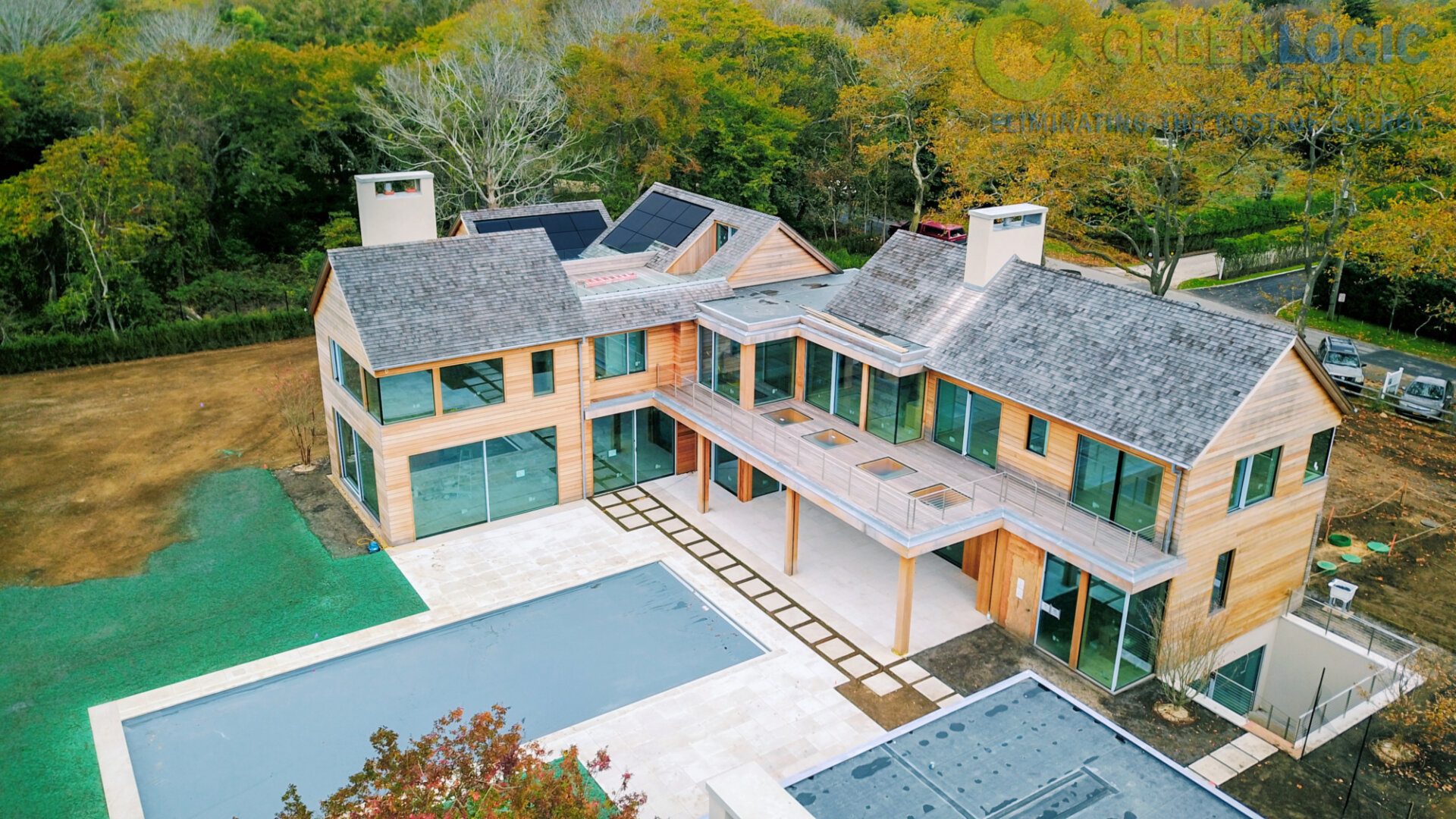
Every GreenLogic system is designed to look like it was always part of the house. The panels sit clean and flush with the roofline, and the work hidden underneath gets the same care as everything you can see. That’s why builders and architects keep bringing us in, and why your system is our next referral.


We take great care to design a system that looks as good as it works. When you see two systems on the same block, it is easy to tell which one is ours. Even the hidden work matters.

Pig icon
$40,000
Average 20-Year Savings for Long Island Homeowners
Get Free Quote

See What Solar Would Cost on Your Roof.

Tell us a bit about the property. A GreenLogic engineer reviews your PSEG LI bill first, then your roof, and then builds a real number. No guesswork.
  • No High-Pressure Sales Calls, Ever
  • Designed Around Your Roofline, Cedar Shake Included
  • We Handle ARB and Village Approvals
  • Local Engineers, Not Out-of-State Subcontractors

Get Your Free Quote

This site is protected by reCAPTCHA and the Google Privacy Policy and Terms of Service apply.
How It Works

From First Call to Power Flowing in 8 to 12 Weeks.

A GreenLogic engineer reviews your PSEG LI bill first, then your roof, then builds a custom proposal around your actual usage. Village approvals included.
01
House
Free Site Audit
We review your roof, shading, electrical panel, and past PSEG LI bills to size the right system. If the house is seasonal, we size it for your peak months, not your average.
02
Gear
Design and Upfront Pricing
You get a roof-specific layout, projected production, and a clear, itemized quote with the New York State credit already factored in. You know what you are paying before you sign.
03
Leaf
Permits, ARB, and Installation
We handle every permit, the architectural review board submission where your village requires one, inspection, and PSEG LI interconnection. Most installs finish in two to three days on site.
04
List
Activation and Warranty
Once PSEG LI grants permission to operate, your system switches on. A lifetime workmanship warranty starts on day one.
Why GreenLogic

Twenty Years on East End Roofs. Not Twenty Months.

We have been installing on Long Island since 2005, with an office on North Sea Road in Southampton. That experience shows up in every quote.
House
We Are the Experts.
NABCEP-certified designers and installers, all in-house. We never hand your project to a rotating out-of-state crew. Your system is our next referral, so we build it like our name is on it, because it is.
Gear
Built for Your Roofline.
Cedar shake, slate, standing seam, historic district. We design around the architecture and carry the ARB submission through Southampton, East Hampton, and Sag Harbor Village review. High-efficiency panels, quality inverters, and Tesla Powerwall backup, all specified for East End conditions.
Leaf
Performance Promise.
If your system underperforms against our projection, we make it right. Written into every contract. No hiccups, no surprises, on time and on budget.
20+
Years on Long Island
3,000+
Systems Installed
4.9 / 5.0
From Google Reviews
40-Year
Performance Warranty
Nabcep
Pseg
Recent Installs

Hamptons Roofs We've Powered Up.

A system expansion on a cedar-shingled main house, run so the wire never shows.
Project bridgehampton
Bridgehampton, NY15 kW
Cedar Roof Expansion

The homeowner wanted more solar on a cedar-roofed house. We swapped the original DC panels for AC modules, then ran conduit into the attic, out through the soffit, behind a second gutter leader. From the ground, nothing shows.

East Hampton Cedar
East Hampton, NY22 kW
Cedar Over Lathe

Cedar laid over lathe means no continuous sheathing, so all 88 standoffs had to land on the structure, and each was located and flashed one at a time. The old array came off first. What went back on is 22.08 kW across six circuits.

East Hampton Groundmount
East Hampton, NY22 kW
Lawn Ground Mount

This property had land, so the panels stayed off the house. An 88-foot array sits 450 feet out at the southeast corner, behind an established hedge. At that distance, the slab is a construction job before it is a solar job.

FAQs

Hamptons and East End Solar FAQ

The questions we hear most often from homeowners between Westhampton and Montauk.
Yes, and the math out here holds up better than most places. The federal 30% credit ended for systems installed after December 31, 2025, so nobody is getting it in 2026. What did not change is the part that carries East End payback: New York State still offers a 25% credit up to $5,000, there is no state sales tax on residential solar equipment and installation, the added home value is exempt from property tax, and PSEG Long Island still credits your excess production at full retail value. Against some of the highest electricity rates in the country, a right-sized system still pays for itself well inside its 40-year warranty.
More than the Long Island average, because East End homes use more. Pool pumps, guest houses, well pumps and outdoor kitchens all push system size up. That cuts both ways: a bigger bill means a bigger offset. We will not quote a number before seeing your PSEG LI bill and your roof, and you should be skeptical of anyone who does.
It often makes more sense. Under PSEG Long Island net metering, the power you produce while the house is empty is banked as credits you draw down when you are here. A system sized to your summer load spends the off-season building the balance that covers it.
We handle the submission. Southampton Village, East Hampton Village, and Sag Harbor all have design review, and historic district properties have tighter rules. We design around the roofline from the start, on cedar shake, slate, and standing seam, and we have been doing it here since 2005. ARB review is a step in our process, not a surprise at the end of it.
Solar panels alone shut off during an outage for line worker safety. Pair them with a Tesla Powerwall, and your house keeps running. On the East End, where storms take the grid down and a dark house can mean a frozen or flooded one if nobody is there, battery backup is worth more than it is further west.
Yes. Panels run on daylight, not heat, and cold weather actually improves efficiency. Production drops in winter, and net metering is what smooths it out: summer surplus covers winter shortfall across the year.