

Planning a Roof Replacement or Renovation in the Hamptons?
Recently, the solar industry has undergone significant change: mergers, consolidations, and even shutdowns. Installers that were trusted names a decade ago simply aren't there anymore. For most homeowners, that fact remains invisible. Until a contractor shows up to replace the roof and asks, “Who do we call about your solar panels?”
The Roof and the Solar System Aren’t Independent
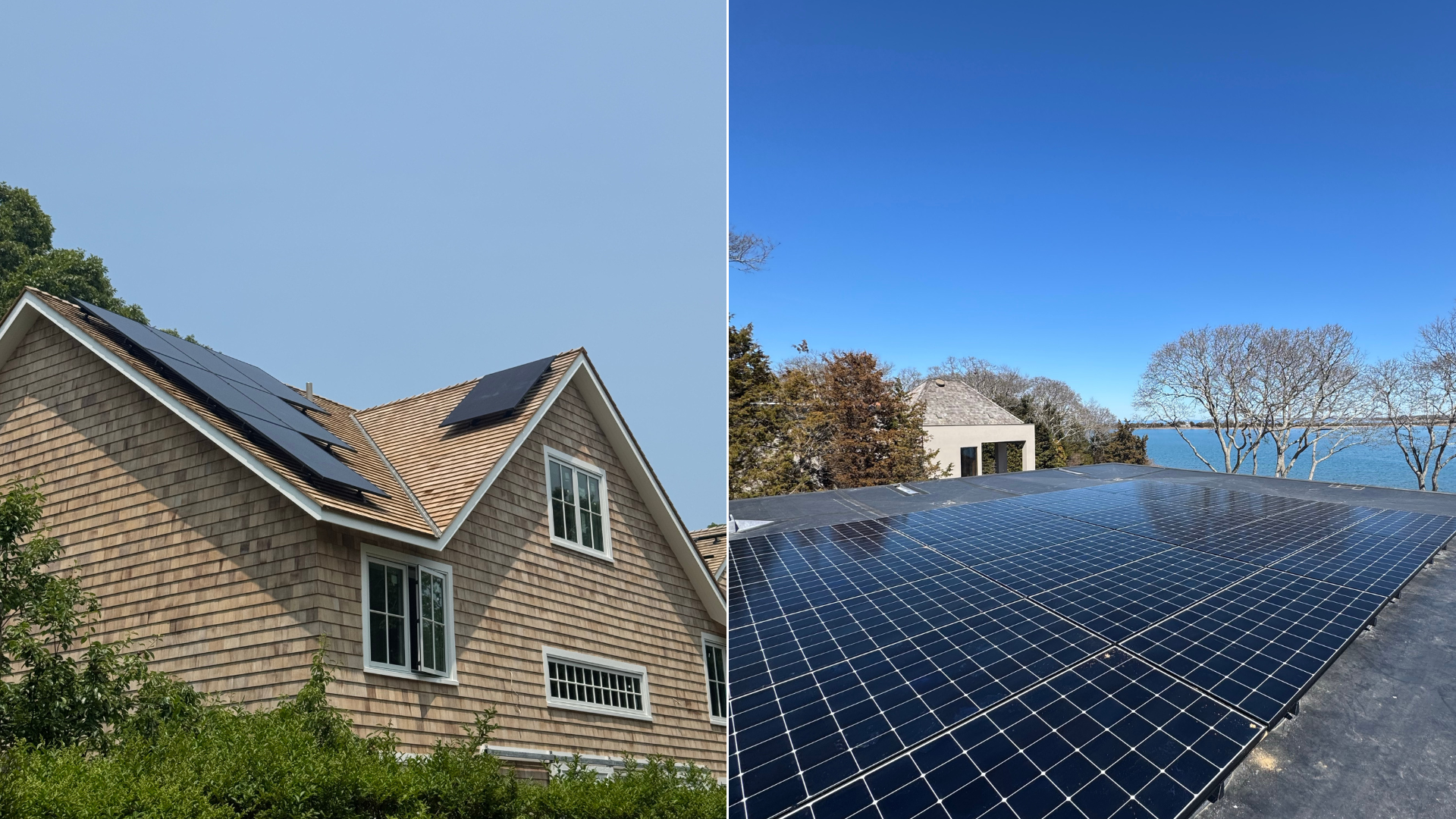
Most homeowners think of a solar installation the way they think of a built-in appliance: it’s there, it works, and it mostly takes care of itself. That’s largely true during normal operation. But the moment a roof replacement enters the picture, the relationship between the roofing system and the solar array becomes impossible to ignore.
Panels need to come down before roofing materials can be replaced. That’s not simply a matter of lifting equipment off a surface. It involves disconnecting electrical systems, removing racking hardware anchored into the roof structure, and then reversing the entire process once the new roof is complete. Permits are often required. Inspections may follow. And the sequence of work has to be carefully coordinated, because a solar crew, a roofing crew, and an electrical contractor don’t naturally operate on the same schedule.
The same coordination challenge applies to a range of other renovation scenarios: a new chimney or stove hood that alters available roof space, a home addition that triggers HERS rating requirements and calls for system expansion, the installation of a whole-house generator that requires solar rewiring, or renovations where conduit and wiring run through spaces contractors need to access. In each case, the solar system isn’t an obstacle, but it does require deliberate planning.
The Gap No One Talks About
On a well-run renovation project, the general contractor coordinates everything. But solar tends to fall into a gray zone. It’s not quite electrical, not quite roofing, not quite mechanical. Subcontractors reasonably assume someone else is handling it. Project managers focus on the critical path. And the solar system, which may have been humming along quietly for years, becomes the last thing anyone addresses, often after work has already begun.
The consequences are predictable: roofing crews waiting on solar removal, compressed timelines, and rising costs. In some cases, panels are moved or disconnected by workers unfamiliar with the system, which can lead to code compliance issues, voided warranties, or performance problems once everything is reinstalled.
A brief coordination conversation before mobilization would prevent most of these issues.
The practical takeaway is simple: before any renovation that touches the roof, the exterior, or the electrical system, involve a qualified solar contractor early. Not at the end of planning, but at the same time as the architect and the GC.
A Complication More Homeowners Are Facing
There’s another layer of complexity that’s becoming increasingly common across the East End.
Some homeowners, particularly those whose systems were installed eight to fifteen years ago, find themselves in a situation where their original solar installer is no longer in business. The company that designed the system, pulled permits, and registered the equipment has closed. There’s no one to call for service records, no warranty support to lean on, and no clear record of how the system was originally configured.
This is no longer a rare situation. The solar industry has gone through consolidation and closures in recent years, and many East End properties are now operating with what are effectively “orphaned” systems.
When a renovation surfaces brings one of these systems into focus; the challenge isn’t just logistical; it’s informational. What equipment is installed? How is the system wired? Where does the conduit run? What do the original permits show?
In these cases, a site assessment by an experienced local solar contractor becomes the starting point. A thorough review can reconstruct system details, evaluate performance, and establish a clear path forward for the renovation.
Before the Crew Arrives
If you’re planning a renovation that may affect your solar system, a few steps taken early can prevent delays and unnecessary costs later.
Start by locating any original installation documentation: permits, equipment specs, and monitoring access. If those aren’t available, a site assessment can help rebuild that information.
Next, identify who is responsible for ongoing service. If your original installer is no longer operating, it’s worth establishing a new service relationship before construction begins, not in the middle of it.
Equally important is coordination. Bringing a solar contractor into the conversation at the same time as your GC ensures that sequencing, scope, and responsibilities are aligned from the outset.
Finally, confirm permit requirements with your local building department. In many East End municipalities, solar removal and reinstallation require separate permits. Having those in place ahead of time helps keep the project on schedule.
For over 21 years, GreenLogic has worked alongside GCs, roofers, and electrical contractors across the East End, coordinating solar work within the demanding timelines of custom home renovations. Whether a system needs to be removed, reconfigured, assessed, or restored to full performance after a long period without service support, the team brings both technical expertise and local insight.
If a renovation is on your horizon and you’d like a site review before work begins, reach out to GreenLogic to start the conversation.
Related Articles

What is Solar Energy? How Do Solar Panels Work?
Solar energy works by capturing the sun’s energy...

Is Solar a Good Investment? Here’s Why
While installing a set of solar panels in the backyard...

Solar Energy Storage: The Future of Reliable Power
Are you worried about being left in the dark with no electricity...
What Can Solar Save?
Schedule a free consultation with a GreenLogic energy consultant. We'll review your energy use and show you exactly what solar would save you.
Give us a call 631.771.5152